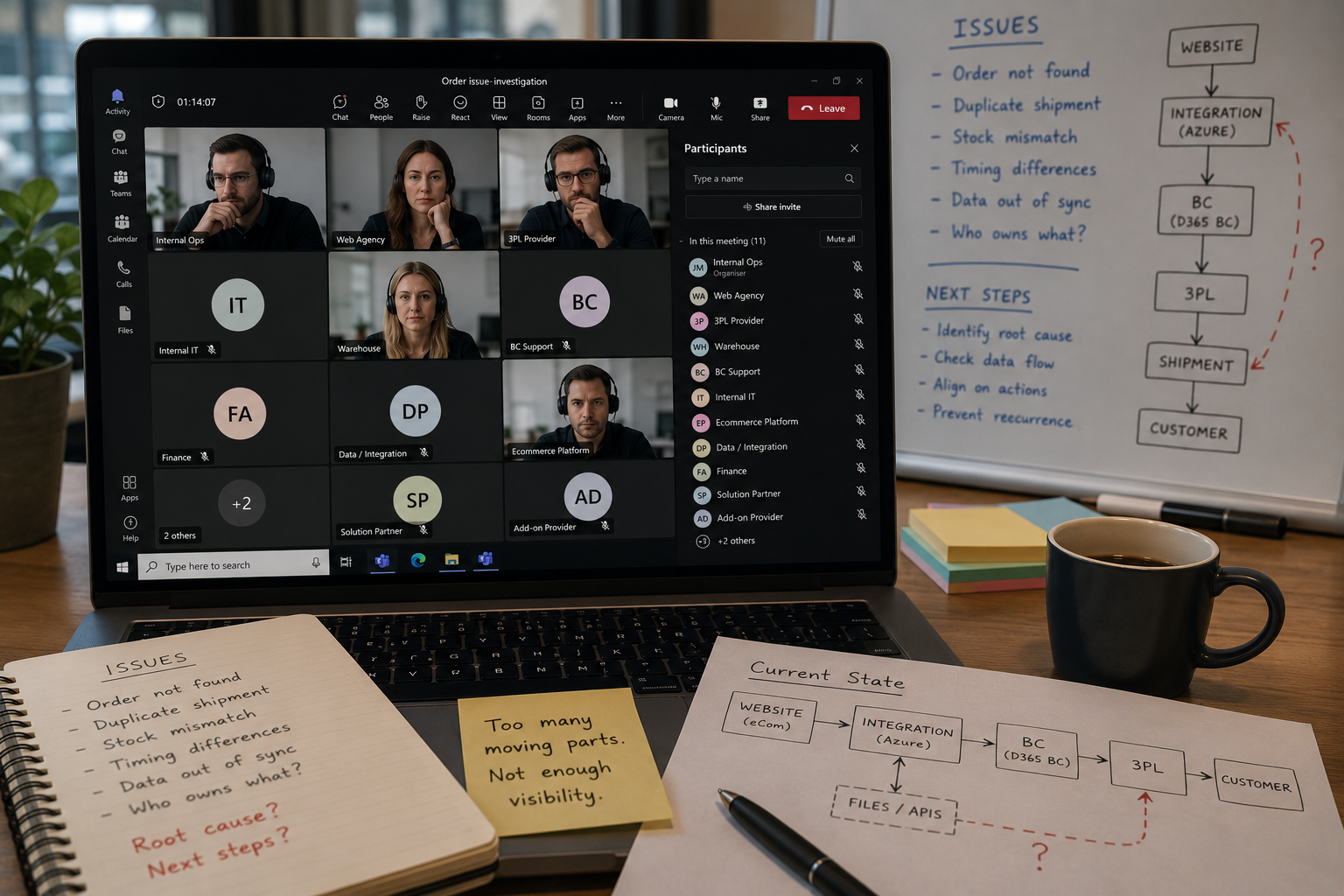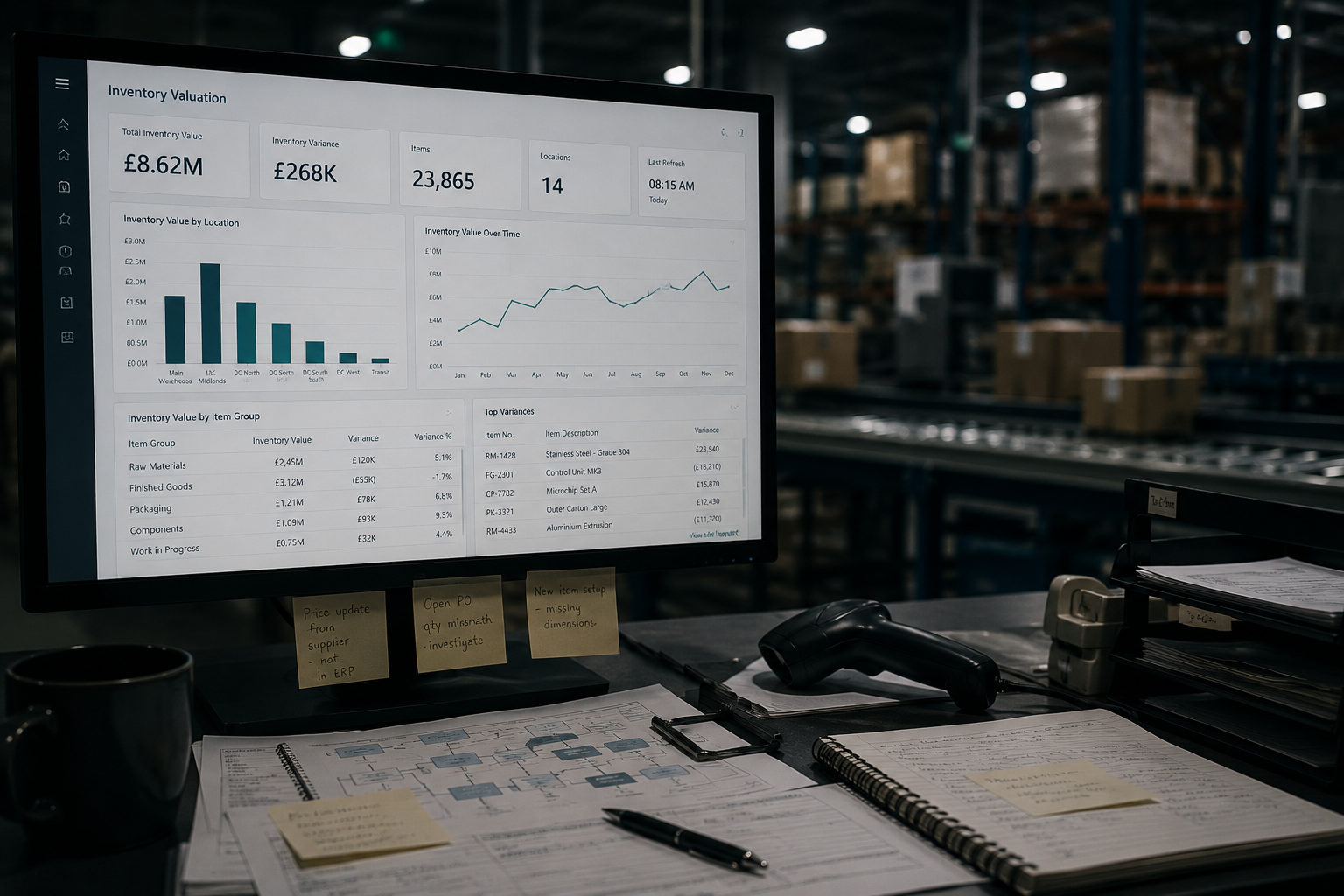

A business wants better warehouse processes.
Less paperwork.
Faster fulfilment.
Better visibility.
Fewer manual steps.
And somewhere along the way, the conversation usually shifts toward custom development.
Could we build this ourselves?
Could we do it in Power Platform?
Could we tailor every workflow exactly to the business?
Technically, often the answer is yes.
But that does not automatically make it the right decision.
In this case, the real objective was not introducing “new technology”.
It was reducing friction inside the operation.
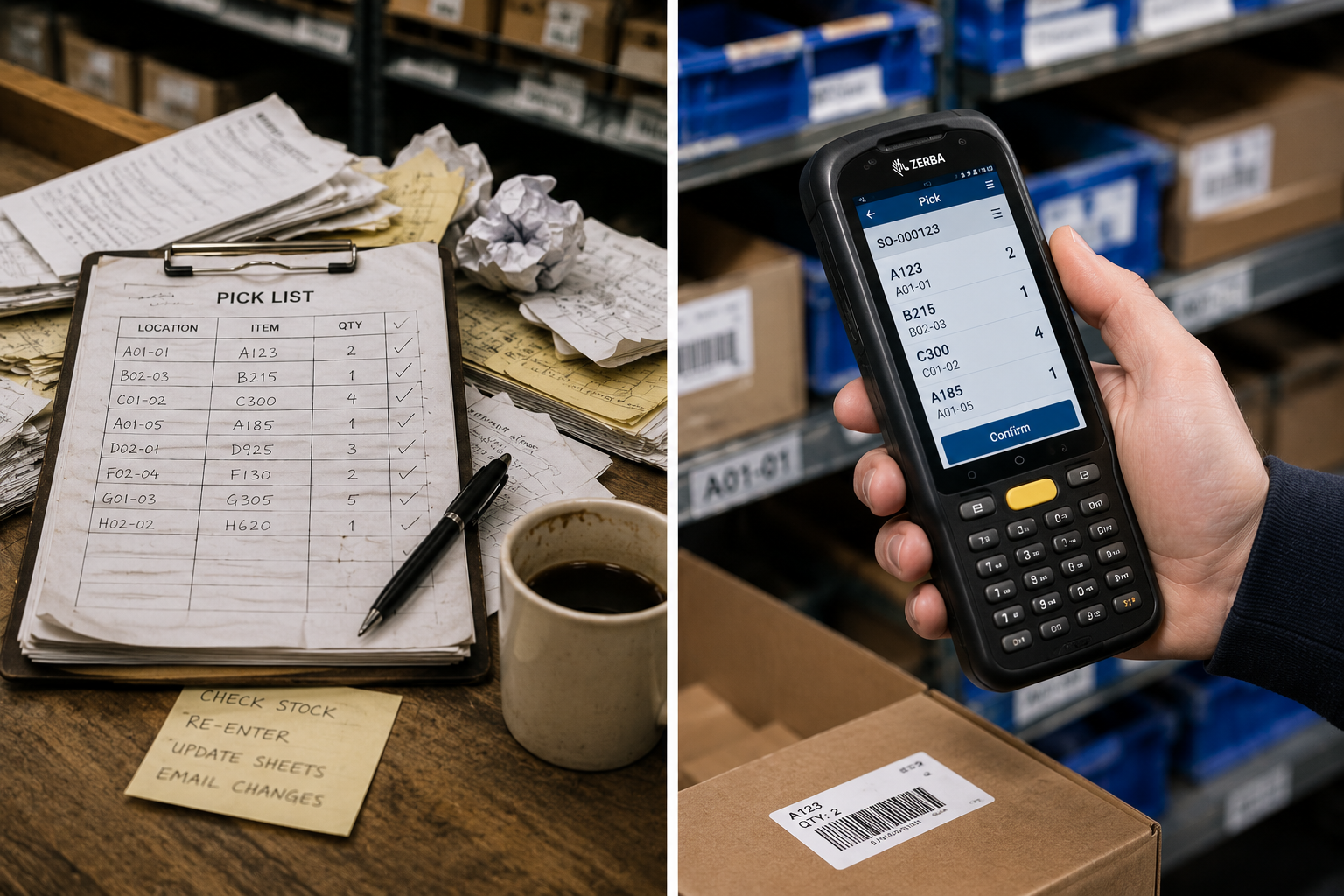
The warehouse was still heavily dependent on:
- printed documents
- handwritten updates
- manual re-entry
- additional admin steps
- and increasing operational pressure during busy periods
The process worked, but scaling it confidently was becoming increasingly difficult.
At peak periods, the warehouse came under exceptional pressure just to keep orders moving.
Paperwork lagged behind activity.
Admin built up.
Operational stress increased.
And improvements like continuous inventory counting – reducing the need for disruptive warehouse shutdowns during yearly stock counts became much harder to introduce cleanly.
The warehouse did not need something flashy.
It needed processes that were faster, clearer and more reliable when the operation was under pressure.
We Deliberately Chose Not To Build It Ourselves
We considered building parts of the solution internally through Power Platform and custom Business Central development.
A few years ago, that probably would have been the direction.
But ultimately, the more important question became:
would customisation genuinely create a better long-term operational outcome?
In this case, we implemented Insight Works rather than rebuilding warehouse processes from scratch ourselves.
Not because customisation is bad.
But because mature warehouse tooling already existed for this exact operational problem space.
Warehouse scanning, handheld device workflows and inventory processes are not simple problems once businesses scale.
Specialist products have already spent years solving edge cases, refining workflows and supporting operational environments under pressure.
Recreating all of that internally would mostly have created:
- additional custom code
- more upgrade overhead
- another platform to maintain
- and more long-term dependency
That did not feel like the best outcome for the customer.
Good Systems Should Make Operations Easier To Run
One subtle trap in technology projects is mistaking technical flexibility for operational maturity.
In reality, heavily customised environments often create:
- more support dependency
- more testing overhead
- more upgrade hesitation
- and more operational risk every time the business evolves
Sometimes the most valuable technical decision is choosing not to reinvent functionality specialist platforms already solve well.
That does mean accepting some boundaries.
Supported products require businesses to work within established patterns rather than controlling every possible detail internally.
But in return, businesses often gain:
- more stable processes
- stronger vendor support capability
- better long-term maintainability
- and less time spent keeping bespoke functionality alive
In this case, that decision also created advantages elsewhere.
Because the warehouse platform already had established integration patterns around areas like EDI packing information, solving adjacent operational requirements became significantly easier than rebuilding everything independently.
The Most Valuable Improvements Are Often The Least Flashy
Some of the highest-value operational improvements are not particularly glamorous.
A warehouse team scanning directly into the system instead of processing paper.
Reducing avoidable admin during busy trading periods.
Improving inventory accuracy.
Creating the foundations for continuous stock counting instead of disruptive yearly shutdowns.
None of these improvements sound especially revolutionary.
But collectively, they create operations that are:
- easier to trust
- easier to scale
- less stressful to run during peak periods
- and easier to improve over time
And ultimately, that is usually what good modernisation should achieve.
Not more technology for its own sake.
Just less friction between the business and the work it is trying to do.