
The warehouse shipped the order.
The customer received the dispatch notification.
But internally, nobody could explain how the shipment had moved through the operation.
The ecommerce platform showed the order.
The warehouse had already processed it.
But elsewhere in the chain, the information did not line up cleanly.
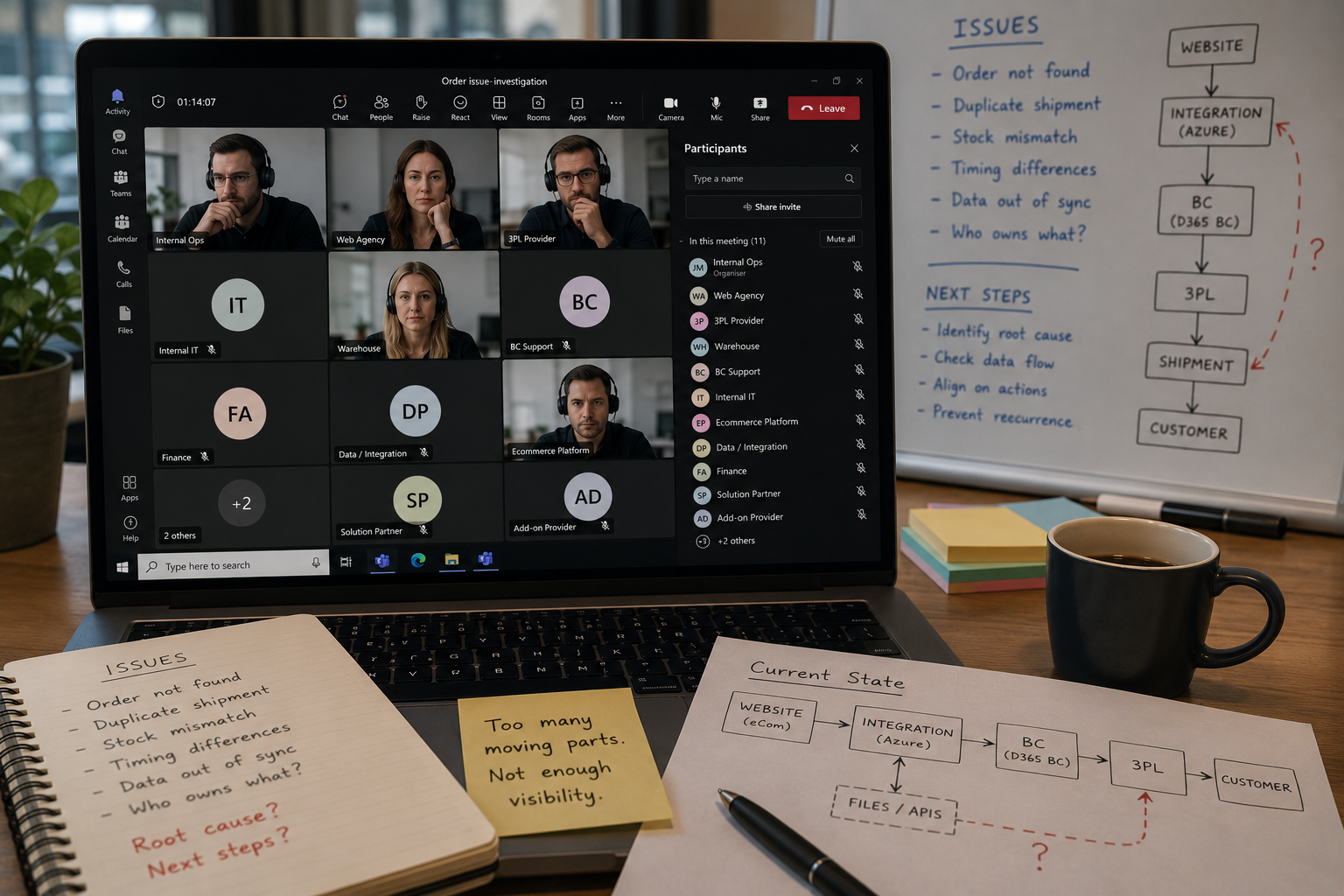
So the calls started.
Was it:
- the ecommerce platform?
- the web agency?
- the warehouse integration?
- the middleware workflow?
- the third-party logistics provider?
- an issue inside the ERP system?
- or simply data arriving in a different sequence between systems?
And that is usually the moment businesses discover the real problem.
Not necessarily broken technology.
Broken ownership.
Complexity Rarely Arrives All At Once
Very few operational environments become difficult because of one major failure.
Most evolve gradually through reasonable short-term decisions.
A supplier gets introduced because they solve one part of the process well.
A workaround gets added during a busy trading period.
An integration layer is introduced because rebuilding the wider process feels too disruptive at the time.
Individually, these decisions often make sense.
The issue is that complexity rarely gets removed afterwards.
It accumulates.
Eventually, businesses can end up with environments where:
- different companies partially own different parts of the process
- integrations contain years of layered exceptions
- resolving a single issue requires coordinating multiple external parties before anyone can identify where the problem actually started
At that point, even small failures become disproportionately difficult to investigate.
The System Still Works – Most of The Time
That is what makes these scenarios difficult to spot early.
Orders still flow.
Customers still receive shipments.
The operation continues functioning.
The problems usually appear during exceptions.
An order exists in one platform but not another.
Stock availability behaves differently between systems.
A shipment appears to have processed twice.
A warehouse action happens before the business itself can clearly trace what triggered it.
Eventually, a build of smaller issues or larger occurrences start to require a “war room” approach:
- multiple suppliers on calls
- conflicting explanations
- unclear ownership
- slow investigation chains
- and growing frustration across the business
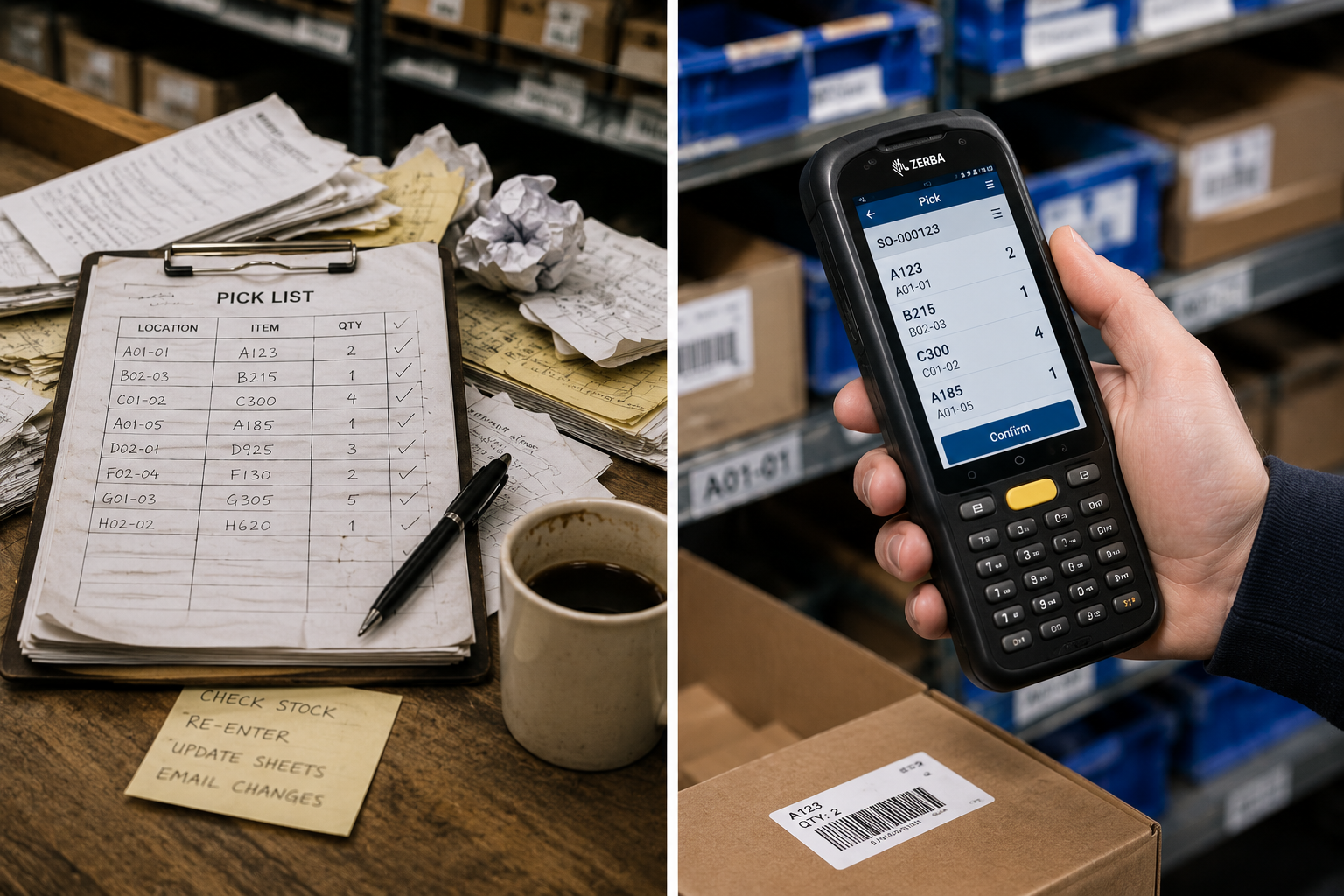
At the same time, the business quietly starts adapting around the instability.
Monthly adjustments become standard procedure simply to get the accounts closed.
During busy trading periods, issues multiply faster than teams can properly investigate them, so the focus shifts toward getting operations moving again rather than understanding why the same failures keep recurring.
Support teams become “human middleware” between disconnected systems, suppliers and workarounds.
And because so much operational energy gets consumed stabilising the environment, there is rarely enough capacity left to properly improve it.
That is usually the point where the business stops managing isolated incidents and starts normalising operational fragility instead.
Ecommerce and Fulfilment Expose This Quickly
Ecommerce and fulfilment environments expose these problems particularly quickly because they operate under constant pressure:
- customers expect accuracy
- warehouses require consistency
- stock visibility needs to remain trusted
- and timing issues between systems quickly become commercially visible
Every additional supplier or integration layer introduces another ownership boundary.
Over time, businesses can reach a point where:
- the ecommerce platform behaves one way
- warehouse operations behave another
- internal teams compensate manually
- and integrations become operationally critical despite nobody fully understanding the process end-to-end anymore
One of the more uncomfortable moments is when businesses realise:
the systems technically work most of the time, but nobody wants to touch them anymore.
That hesitation is usually a warning sign.
More Suppliers Does Not Automatically Create Better Control
One subtle trap businesses often fall into is assuming additional suppliers automatically reduce risk.
In practice, additional platforms, integrations and providers can sometimes fragment accountability further if nobody is stepping back and looking at the operation holistically.
Eventually:
- the web agency owns one part
- the warehouse provider owns another
- the integration provider owns another
- internal teams compensate manually
- and issue resolution becomes dependent on coordinating multiple external companies during every major incident
At that stage, the business is no longer struggling with one isolated problem.
It is struggling with a lack of clear ownership across the operational chain itself.
Simplification Is Usually About Clarity
In environments like this, improvement is rarely about one magic technical fix.
More often, it comes from:
- reducing ambiguity
- simplifying ownership
- improving visibility across the process
- removing unnecessary layers
- and ensuring the operation remains understandable as the business evolves
Sometimes the most valuable improvement is not adding another platform or workaround.
It is reducing the number of moving parts involved in critical operational processes.
Because if recurring issues regularly involve:
- multiple suppliers
- long investigation chains
- repeated manual intervention
- late-discovered failures
- or growing operational hesitation around change
then something more fundamental is usually wrong underneath.
The Biggest Risk Is Often The Complexity That Started Feeling Normal
Complexity rarely appears suddenly.
It accumulates gradually through urgency, adaptation and layered compromise.
And because businesses adapt around it over time, environments can continue feeling “normal” long after they have become fragile underneath.
The challenge is that inherited complexity often only becomes fully visible once the business tries to:
- scale
- modernise
- improve fulfilment
- reduce dependency
- or simply understand how critical processes actually behave end-to-end
At that point, another workaround usually does not solve the problem.
In many environments, the real challenge is no longer the technology itself. It is that years of short-term fixes, fragmented ownership and operational pressure have gradually replaced clear process ownership altogether.
And sometimes, doing the right thing operationally means pushing back against another quick fix, even when the business is under pressure to keep moving.
Because if recurring instability becomes accepted as “just how the environment works”, scaling, improvement and operational confidence eventually become almost impossible to achieve.